
Beach Bliss: Merge Puzzle
Kite Games ASPuzzle
4.3300.00 Reviews
- Version
- 1.0.3
- Installs
- 50.00K
- Age Rating
- Everyone
Screenshots
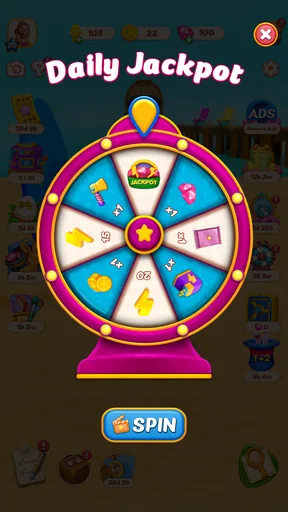
Our Review of Beach Bliss: Merge Puzzle
 Analysis by Appyee
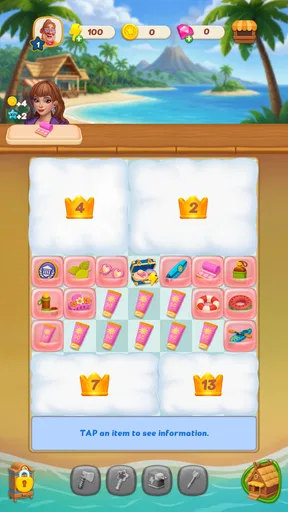
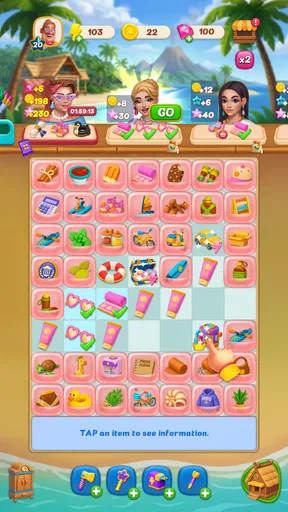
I spent time with Beach Bliss: Merge Puzzle as a light, beach-themed puzzle game, and my first impression was straightforward: it is built for short, calming sessions rather than intense competition. The central appeal is combining matching pieces, watching the board develop, and using the resulting progress to give beach locations a visual makeover. That loop is easy to understand, but it has enough small decisions to make each round feel more involved than a simple matching exercise.
It is a free game from Kite Games AS, listed in the puzzle category for Everyone. The game has an average rating of 4.2 from around 3,200 ratings, with roughly 300 written reviews, and it has passed 50,000 installs. Those figures suggest that it has found a modest audience without pretending to be a huge social phenomenon. I think that fits the experience: Beach Bliss feels personal and casual, something to open when I want a little progress without committing to a long play session.
How the basic merge-and-makeover loop feels
The normal workflow is pleasantly simple. I look over the available pieces, identify useful matches, merge them, and then decide how to spend the progress that comes from clearing space or completing objectives. The beach makeover layer gives the puzzle a reason to continue. Instead of solving isolated boards with no visible consequence, I get a sense that each successful sequence contributes to a more attractive setting.
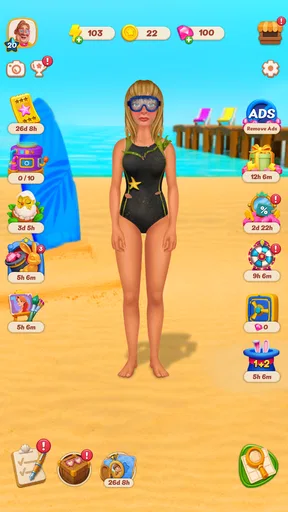
That connection between puzzle actions and decoration is important. The merge mechanic alone would probably feel repetitive after a while, especially for players who have already tried several games in this style. The makeover element gives me a visual target, while the puzzle board supplies the moment-to-moment decisions. Neither side completely replaces the other, but together they create a comfortable rhythm.
My preferred way to play is to begin by scanning the whole board rather than immediately combining the first obvious pair. A quick look helps me notice whether a merge will open a useful space, create another combination, or leave an awkward item blocking the next move. This habit matters more than speed. The game rewards thinking one or two actions ahead, even though it remains approachable for someone who does not usually play complex puzzle games.
Beach Bliss works particularly well in everyday gaps. I can imagine playing it while waiting for an appointment, during a quiet coffee break, or at the end of the day when a more demanding game would feel tiring. The beach presentation supports that use because it gives the game a relaxed mood rather than a pressured one. I would not choose it when I want a deep competitive challenge, but I would choose it when I want a gentle activity with visible progress.
The most useful early habit is to treat empty board space as a resource. A merge is not automatically good just because it is available. If it creates a higher-level piece but leaves the rest of the board crowded, the short-term reward may cause trouble later. I found it better to ask whether the move improves the next few possibilities. This is a small change in thinking, but it makes the board feel more manageable.
Another practical approach is to separate immediate matches from planned matches. Immediate matches are pairs I can combine without affecting anything important. Planned matches involve holding pieces in place until a third or related opportunity becomes available. I do not need to plan every move, but saving a useful piece for later can prevent the board from becoming a collection of awkward leftovers.
The makeover progression also changes how I judge a session. A puzzle round does not need to end with a perfect feeling to be worthwhile if it advances the setting. That helps soften the frustration of an inefficient board. At the same time, players who want every move to be optimal may find the decorative layer less satisfying than a pure logic puzzle, because the reward is partly visual and progression-based rather than a strict measure of skill.
Settings and small habits worth checking
Before settling into regular play, I recommend checking the available in-game settings rather than assuming the default arrangement is ideal. The most useful things to review are sound, music, notification behavior, and any display or language choices that appear on the device. I would not leave sound effects running automatically in every situation. For a quiet public place, muting the game makes the experience less intrusive; at home, gentle audio can add to the beach atmosphere.
Notifications deserve the same practical treatment. If reminders interrupt you too often, turning them down or off can make the game feel more like a tool for relaxation and less like something asking for attention. On the other hand, a player who likes returning to a decorating project may prefer to keep useful reminders available. The best choice depends on whether Beach Bliss is part of a planned break or something you only open when you happen to remember it.
I also suggest checking the device’s general battery and display settings if you expect to play for longer stretches. Bright, animated puzzle games can be more tiring than they first appear, particularly at night. Lowering screen brightness and using a comfortable system setting can make a bigger difference than changing your playing style. This is not a special feature of the game, but it is a sensible way to make the beach visuals work for you instead of becoming distracting.
Because the game is free to download, I would also look at the purchase controls on the device before handing it to a child. The age rating is Everyone, but optional purchases range from $0.99 to $99.99 per item. That is a meaningful distinction for families: the content may be suitable for a broad audience, while spending still deserves supervision. I prefer deciding in advance whether purchases are allowed rather than making that decision in the middle of a tempting progression moment.
Experienced players can make the opening of each session more consistent by using the same inspection routine. I check the board, identify the most constrained area, look for merges that create space, and only then begin spending moves. This reduces random tapping and makes it easier to understand why a board became difficult. It also helps when returning after a break, because I am not relying on memory of a previous plan.
There is no benefit in rushing through a calm puzzle simply to finish quickly. I get more from the game when I pause after a merge and reassess the new layout. A newly created piece can change the best move, and acting immediately can hide a better combination nearby. This pause-and-scan habit is especially useful for players who normally rely on reflexes in match games.
Faster patterns without losing control
Speed in Beach Bliss comes from reducing wasted actions, not from tapping as quickly as possible. I try to clear the most crowded section first when doing so creates several future options. A clean area gives me room to stage pieces and makes later combinations easier to see. By contrast, chasing a high-level merge in an already open area can leave the difficult section untouched.
One repeatable pattern is to build around a stable corner or edge. Keeping a portion of the board organized gives me a reference point while the center changes. I avoid scattering pieces across every available space because that makes it harder to recognize groups. This approach is especially helpful on a small screen, where visual clutter can make similar pieces look less distinct during a longer session.
I also try to avoid creating a chain of merges unless I have considered where the resulting pieces will sit. A chain can feel satisfying, but it may consume the open spaces needed for the next objective. When I have room, I use the chain. When the board is tight, I prefer a controlled merge that leaves a clear follow-up. That trade-off is one of the more interesting parts of the game: the most spectacular move is not always the most useful one.
Another efficient habit is to delay decorative decisions when the puzzle board needs attention. If the makeover screen offers several possible improvements, I first make sure the board is in a comfortable state. Switching focus too often can break my mental map of the available pieces. I find it easier to finish a small puzzle goal, review the progress earned, and then spend the decorative reward in one deliberate visit.
Players who enjoy optimizing can keep a simple mental record of what usually causes trouble. For me, the common mistake is accepting a short-term merge that produces a difficult item to place. Once I notice that pattern, I become more selective about which pieces I combine first. This is a useful form of self-correction because it improves play without requiring a complicated guide or external tool.
There is also a social difference between this game and many alternatives. Beach Bliss does not present itself to me as a head-to-head contest. I am not comparing every move with another player in the moment, so the pressure is lower. If you usually play competitive match-three games for leaderboards, timed events, or direct challenge, this may feel too quiet. If you prefer a private project that develops at your pace, the lack of pressure is a strength.
Where the design reaches its limits
The same simplicity that makes the game welcoming can eventually become its main limitation. Merge puzzles depend on the satisfaction of seeing pieces grow and spaces clear. After repeated sessions, that pattern can become familiar. The beach makeover progression helps maintain interest, but it cannot completely change the underlying action. Players looking for constantly changing rules or demanding logic may outgrow the loop.
I also think the game is better suited to flexible play than to strict daily routines. If you want a puzzle that tests a precise solution under pressure, a traditional logic title will probably offer more depth. If you want a match game with rapid rounds and a strong competitive structure, another alternative may be more suitable. Beach Bliss sits between those choices: it has decisions, but it prioritizes comfort and progression over difficulty.
The free-to-play structure is another point to consider carefully. The download costs nothing, but the presence of optional purchases means that the experience is not identical to a fully paid puzzle game. I would recommend using the free version first and paying attention to how comfortable you feel with the progression rhythm. If you dislike any game that presents purchase options during play, a one-time-purchase puzzle may be a better fit.
For children, the Everyone rating makes the game broadly approachable, but I would still treat the purchase range as a family-management issue. A child may understand the merge mechanic without understanding the value of a large optional transaction. Device-level purchase restrictions are therefore sensible, especially if the game is installed on a shared phone or tablet. This is not a reason to reject the game, but it is a reason to set boundaries before play begins.
Device compatibility is reasonably broad because the game supports Android 7.1 and later. That makes it accessible to people who are not using a recent phone, although the exact feel can still depend on screen size and general device performance. On a smaller display, careful scanning becomes more important because crowded pieces are harder to distinguish. I would use a larger screen when possible if the player has visual fatigue or prefers planning several moves ahead.
The current version is 1.0.3, which places the game in a relatively early stage of its release history. I would approach it as a focused experience rather than assuming it already has the depth of a long-established puzzle franchise. That is not automatically negative; a compact game can be easier to understand and less overwhelming. It simply means that players should judge it by the quality of its current merge-and-makeover loop instead of expecting a huge ecosystem around it.
Who should install it, and who should skip it?
I would recommend Beach Bliss to someone who enjoys organizing pieces, likes visible visual progress, and wants a relaxing game that can be played in short bursts. It is especially suitable for players who find ordinary merge puzzles a little empty and want a setting that gives each session a sense of purpose. The beach theme is not just decoration in my experience; it sets the emotional pace and makes the game feel more like a quiet hobby than a test.
It is also a good choice for a casual player who does not want to learn a complicated control system. The basic workflow is approachable, while the better habits—protecting space, delaying certain merges, and scanning before acting—give experienced users room to play more carefully. That combination makes it easy to start without making every session completely mindless.
I would skip it if your priority is advanced strategic depth, competitive ranking, or a large variety of puzzle rules. I would also skip it if you strongly prefer games with no optional spending at all. In those cases, a premium logic puzzle or a more competition-focused alternative will probably match your expectations better. Beach Bliss is strongest when its relaxed pace is part of the appeal, not something you tolerate while waiting for a harder game.
For an everyday example, I can see using it after work while waiting for dinner to finish. I would play one short session, clear a few useful combinations, and make one or two makeover choices before putting the phone down. The game does not demand that I remember a complex story or maintain a long tactical sequence. If I return later, I can inspect the board again and continue with a fresh plan. That low commitment is one of its most practical qualities.
My final recommendation is positive, with sensible expectations. Beach Bliss: Merge Puzzle is at its best as a calm, decorative merge game rather than a demanding puzzle laboratory. I like the way the makeover progression gives purpose to familiar combinations, and I appreciate that careful board management matters more than frantic tapping. The limitations are equally clear: repetition may appear for dedicated players, and optional purchases mean families should manage spending settings.
After playing with a consistent scan, space-saving merges, and deliberate pauses, I found the experience more satisfying than simply combining whatever appeared first. That is the real reason I would suggest trying it: the game is easy to enter, but small repeatable habits make it feel more thoughtful. If a free beach-themed puzzle sounds like the right kind of quiet break, this release from Kite Games AS is worth exploring. If you need constant novelty or serious competition, choose a different puzzle style instead.
Verdict
Strengths of Beach Bliss: Merge Puzzle
- Relaxing beach-themed visuals and soothing background music
- Simple merge mechanics are easy to learn and play casually
- Short levels fit well into quick breaks
- Progression unlocks new beach areas and decorative elements
- Playable offline in many situations without a constant connection
Limitations of Beach Bliss: Merge Puzzle
- Energy limits can interrupt longer play sessions
- Some upgrades and rewards may require considerable grinding
- Frequent prompts can encourage optional purchases
- Limited puzzle variety may feel repetitive over time
- Progress can be slower for players who avoid spending money
Other Releases by Kite Games AS
View All
Knock Fever
Puzzle4.6
Similar Picks in This Category
View All
Block Blast!
HungryStudio4.8

Braindom: Brain Games Test
Lahana Game Studio4.6

AMAZE!
CrazyLabs LTD4.6

Sudoku - Classic Sudoku Puzzle
Oakever Games4.7

Art Puzzle - Puzzle Games
Easybrain4.8

Amaze GO!
Oakever Games4.9
Frequently Asked Questions
What is Beach Bliss: Merge Puzzle?
Beach Bliss: Merge Puzzle is a relaxing casual puzzle game built around merging matching objects to create upgraded items. As you progress, you help develop and decorate a colorful beach-themed setting while completing objectives and unlocking new content. Its combination of simple drag-and-drop gameplay, light progression, and tropical visuals makes it suitable for short sessions or longer, more leisurely play.
How do you play Beach Bliss: Merge Puzzle?
Gameplay is based on combining two or more identical items whenever possible. Merging produces a higher-level object, which can then be used to complete tasks, clear space, and advance the story or island improvements. The board can become crowded, so planning your merges is important. Saving room for future pieces and prioritizing requested items usually makes progress smoother.
Is Beach Bliss: Merge Puzzle free to download and play?
Beach Bliss: Merge Puzzle can generally be downloaded at no initial cost, allowing players to try the core experience without buying the game first. However, free-to-play games may include optional in-app purchases, such as currency, boosters, energy, or other convenience items. Availability of specific purchases can vary by platform, region, and version, so check the store listing before downloading.
Does Beach Bliss: Merge Puzzle require an internet connection?
Some features of Beach Bliss: Merge Puzzle may work without a continuous internet connection, particularly basic puzzle interactions that have already loaded. Nevertheless, an online connection may be required for advertisements, purchases, cloud synchronization, events, updates, or account-related functions. If you plan to play offline, test the game after installation because requirements can change with updates and device settings.
Is Beach Bliss: Merge Puzzle suitable for children?
The merging mechanics are easy to understand and the beach-themed presentation is generally approachable for casual players, including older children. Parents should still review the current age rating, privacy information, advertising practices, and in-app purchase settings before allowing independent play. If the game offers purchases or frequent ads, parental controls are recommended to prevent accidental spending or unwanted interactions.
Play our best games!


